
In this article
Harrington's case shows why the decision to answer investigators deserves legal advice—even when you believe you have nothing to hide.

If investigators read you your Article 31 rights, confer privately with defense counsel before answering questions about the allegation. That is Cold Blue Steel's recommendation. You can decide with counsel whether, when and how to give an account. You do not have to make that decision alone, under the pressure of an interview.
The immediate worry is understandable: If I ask for a lawyer, won't I look guilty? You may want to demonstrate cooperation, correct a misunderstanding or reassure someone in authority that you are telling the truth. The fear deserves an answer, especially in a profession that values responsiveness and respect for authority.
In an official suspect interview, Article 31(b)'s warning requirement applies to someone already accused or suspected of an offense. Invoking your rights does not create that underlying suspicion. The warning does not prove that an investigator has reached a final conclusion about guilt; suspicion and a settled judgment are different. It does tell you that answers can become evidence against you. That is enough reason to seek advice before giving them. Article 31(b), UCMJ, Cornell LII reproduction.
The fear of looking guilty
Research helps explain why an innocent person might agree to an interview. In a simulated-theft study, psychologists Saul Kassin and Rebecca Norwick found that 81% of innocent student suspects waived Miranda rights, compared with 36% of guilty student suspects. Some innocent participants worried about appearing guilty; many believed their innocence made speaking safe. Full paper, pp. 215–218; DOI.
This was a laboratory study with 72 student suspects, not a study of military interrogations or a prediction of how often innocent service members confess. It supports a narrower point: being innocent can make speaking with investigators feel safe.
Seeking counsel is a lawful response to an investigation. Under Military Rule of Evidence 301(f)(2), the fact that an accused invoked silence or requested counsel during official questioning, in exercise of Fifth Amendment or Article 31 rights, is not admissible against that accused. That protection cannot promise what someone privately thinks. Your decision should protect your legal position rather than depend on winning an investigator's approval. 2024 Manual for Courts-Martial, M.R.E. 301(f)(2), reproduced PDF, p. III-4.
Harrington was warned. His confession still became the case against him.
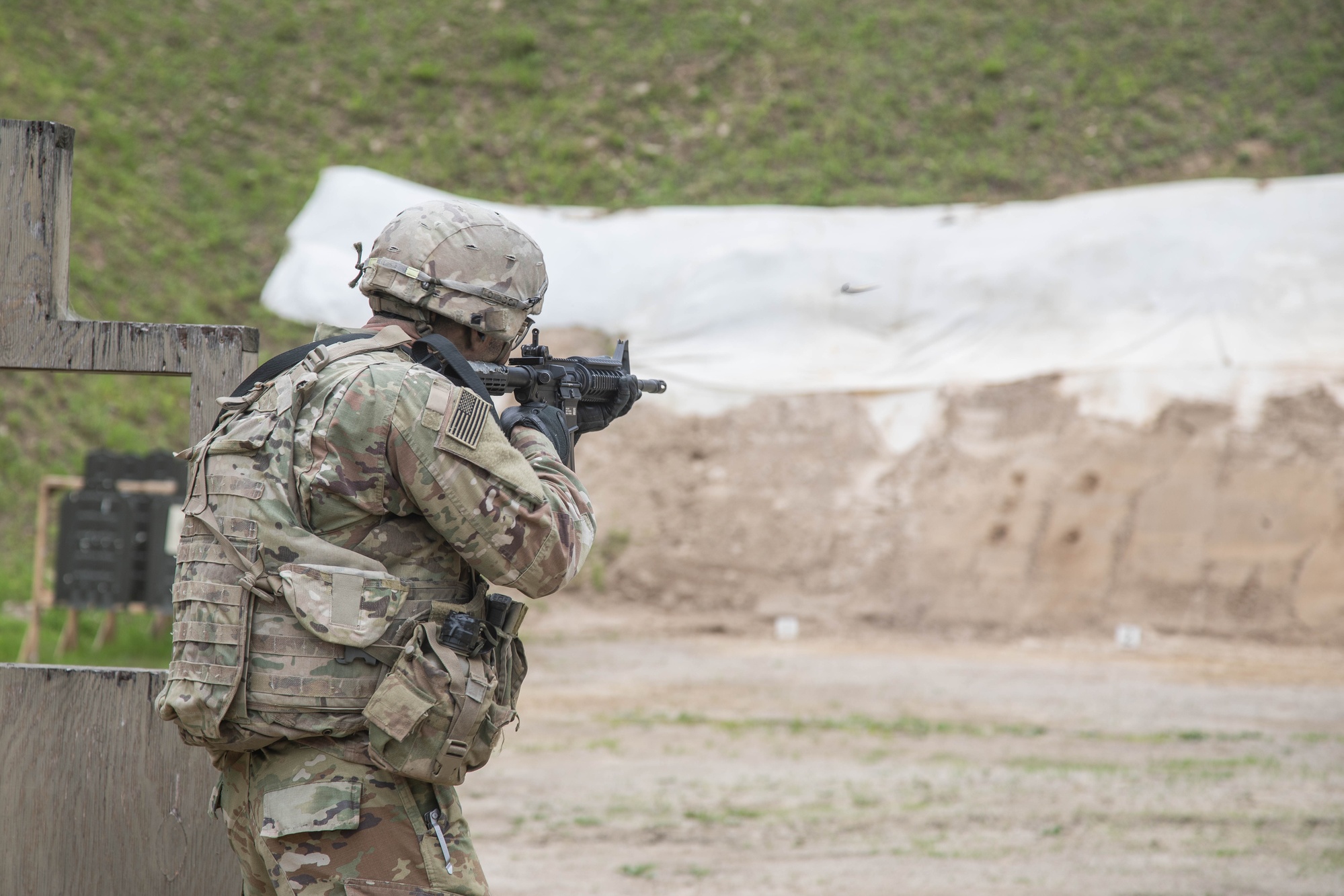
On June 5, 1981, gunfire at an Army qualification range at Camp Casey, Korea, killed four servicemen and wounded another. Private Lacy M. Harrington was later convicted of one unpremeditated murder and one attempted murder. His sentence included 20 years' confinement at hard labor and a dishonorable discharge. United States v. Harrington, 18 M.J. 797, 799 & n.1 (A.C.M.R. 1984).
The appellate court expressly found that Harrington received repeated Article 31 warnings and voluntarily waived his right to remain silent. After a polygraph examination and repeated denials, he admitted shooting a victim. Investigators suggested possible ways the shooting occurred, then typed a statement that Harrington reviewed, annotated and signed. His account said his roommate, Specialist Four Archie Bell, had held a rifle to his head and ordered him to shoot. Opinion, p. 805.
The confession became the most significant evidence supporting his guilt on the murder charge. But the court found that account unsupported by the shooting sequence and eyewitness evidence. Without evidence of a prearranged plan, the interval was too short for his alleged participation in the initial burst of gunfire. The court dismissed the murder charge for insufficient evidence. Opinion, pp. 804–805.

The outcome needs precision. The attempted-murder conviction was separately reversed because hypnotically refreshed identification testimony should not have been admitted, and a retrial was permitted. A 1991 thesis reports that the remaining charge was later dismissed because retrial was impractical. That later order has not been independently recovered, and neither disposition is presented here as conclusive proof of factual innocence. Opinion, pp. 804–805; Machamer thesis, pp. 68–69.
Harrington's case supports a practical lesson without overstating the outcome: a valid warning and a voluntary waiver did not prevent a confession from supporting a murder conviction that the reviewing court found unsupported by the evidence. The record does not tell us why Harrington waived his rights, and it cannot prove that consulting counsel would have prevented prosecution. It shows the consequences of committing to an account that became central evidence against him.
Make the request clear
A service member who wants legal advice before answering can say:
“I am exercising my right to remain silent. I want to speak with a lawyer before answering questions.”
Then stop discussing the allegation and seek defense counsel. Continuing to explain the allegation can produce additional statements and disputes about whether you restarted questioning. If you have already answered questions, ask counsel about those statements and your choices going forward; invoking now does not erase what was said earlier.
Article 31 supplies warnings about the allegation, silence and possible use of statements. Counsel protections arise through additional constitutional and military rules, whose application depends on the circumstances. The practical recommendation remains straightforward: do not waive silence to explain yourself before getting legal advice. Article 31, Cornell LII reproduction; 2024 MCM, M.R.E. 305, reproduced PDF, pp. III-6–III-8.
Clear wording matters. In United States v. Hurtado, decided March 23, 2026, the Court of Appeals for the Armed Forces upheld suppression after finding a request for counsel unambiguous in context. The divided decision illustrates how even the meaning of a request can become contested litigation. State the request directly; do not leave it as a tentative question about whether a lawyer might be useful. Official opinion, pp. 5–8.
A policy lesson: teach the decision, not just the warning
Cold Blue Steel proposes making consultation with defense counsel the standard recommendation in service-member rights education. This is an educational proposal, not a claim that a new military rule requires every suspect to consult a lawyer. An informed person retains the choice whether to speak.
Rights education should address the fear of looking guilty directly, teach a clear request for counsel, and give service members a practical route to their service's defense organization. Investigative training should reinforce respect for an invocation and the need to test a resulting statement against independent evidence. A signed waiver documents a decision; it does not establish that the account that follows is accurate.
You can be respectful, truthful and disciplined while asking for counsel. When the questions concern your suspected misconduct, get advice before choosing your answers.
Historical case study and general educational guidance. A qualified defense lawyer can advise on the particular facts and applicable rights.